Monday, August 8, 2011

Forest in the Mist


The forest practically glowed in brilliant green after the rain

It had rained the night before and it was still drizzling lightly when we headed to Lambir one Saturday morning in June, but as soon as we entered the forest the tall canopy sheltered us from the rain, so it was not necessary to use any rain gears at all.

The ground was wet but not muddy and the air was a few degrees cooler than on normal days. It was a nice change from the hot and humid weather we had for the past few weeks.

Screened in mist the forest that day had a dreamy look as if nothing existed except for the path and trees on both sides of us. It was quiet as we made our way through the forest to Bukit Pantu; the only sounds accompanying us were the occasional bird calls and the gentle hum of the forest muted by the mist.

I think it was about one and half hours later (who were keeping tab on the time anyway) when we arrived at the summit of Bukit Pantu to un-obscured views of the forest all around. We didn't know when the rain had stopped, but despite it being past 9 and near 10 am, a lot of the mist had yet dissipated, it draped like a soft and white blanket clouding the forest below us.

It was so peaceful at the top we stayed for more than 40 minutes, watching the mist slowly lifted from the forest as the temperature gradually rose.

We were definitely glad to have made the decision to go into the forest despite the drizzle and experienced the forest in a different atmosphere. There was something oddly calming and yet uplifting about being out in the forest breathing in the clean and fresh air on a misty morning, certainly felt like we were closer to Mother Nature that day.

Sara Wong/MNS Miri


Last steep climb just before the peak of Bukit Pantu

The forest was shrouded in the swirling mist

Nepenthes albomarginata which can be found at Bukit Pantu

Sunday, March 27, 2011

Typical attractions along a jungle hike


The Lambir Hills National Park in Miri has well-maintained trails and you can be sure to hike in white shoes, socks and clothes and come out clean, unless of course you get caught in a thunderstorm.


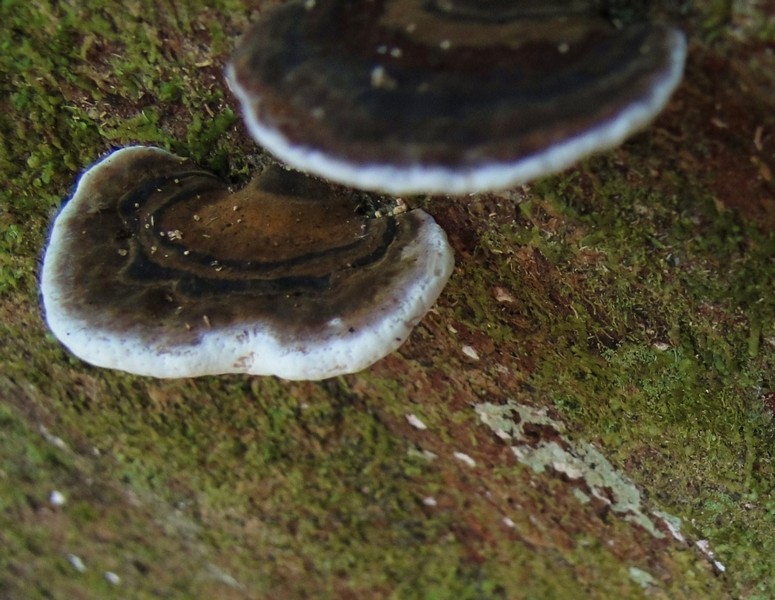
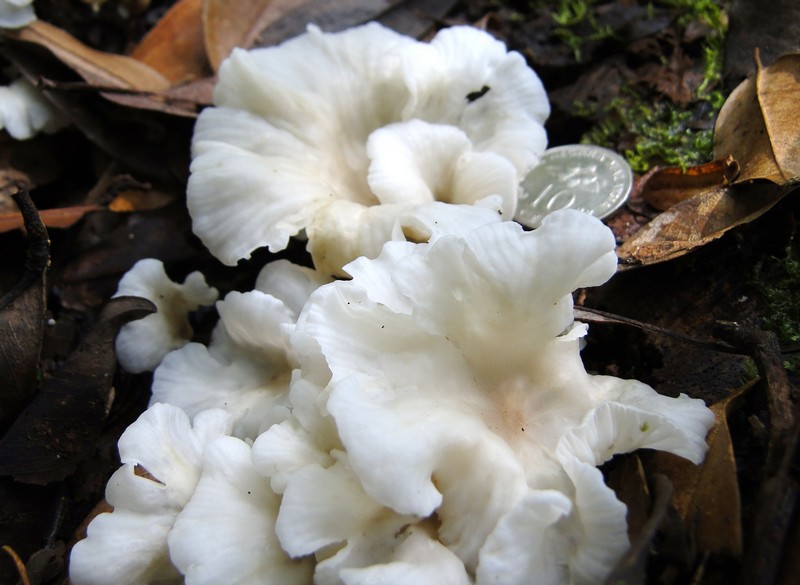
My most recent hike was more eventful than expected so I am sharing some photos here on the beautiful fungi and mushrooms on the forest floor, that look like cookies and candies, that reminded me of my hungry tummy.


Usually after months of rain followed by a short dry spell, the forest is beautifully decorated with bright-coloured fungi and mushroom. Some examples are included herein.


Wednesday, March 23, 2011

Trail Maintenance at Lambir Hills National Park

"Hilton" Lambir, basecamp for the trail maintenance work, bedroom, kitchen and a vast green open air living room.

Have you ever hiked in Lambir Hills National Park, either to the peaks of Bukit Pantu and Bukit Lambir, visited and swam in refreshing jungle pools, or simply enjoyed the walk in possibly the most biologically diversed forest in the world and wondered what it would take to keep a network of trails you've walked in good shape?

Last year in March, Chief Warden of Lambir Hills National Park informed us that a major maintenance work was planned. Work was to be carried out on all existing trails in the Park as well as to install distance markers on all trails as well as assign tree identification tags on subjects along the Inoue Trail.

The purpose of this work was to provide a more satisfactory, high quality experience and safe visit to all visitors and regular trekkers.

MNS Miri was invited to participate in this trail maintenance work. Of course I couldn’t miss this wonderful opportunity to spend a day in the field working alongside the maintenance crew and get a handle on what’s involved to maintain the trails that I hike regularly. Opportunities like this don't come knocking everyday.

It was a Sunday afternoon when I entered the trail and hiked to Ridan Waterfall where the main crew was stationed. Ridan Waterfall is strategically located in the middle of the trail system and has been used as base camp for overnight maintenance work by the Park many times before. It is a lovely spot with a big pool by Sg Lepoh, only 10 - 15 minutes walk away from Ridan–Lepoh Trail.

The crew members, consisting of Hamir (crew leader), Brian (sawyer), Tumbi and Francis who recently joined the Lambir team, had already been working in the forest for several days and have already completed trail maintenance work along the Summit and Bakam Trails. Tomorrow we would be going to Oil Well. I started hiking Lambir Hills for 5 years, but have only been to the Oil Well once before because the trail was not used as regularly and therefore quite rundown and neglected. I couldn’t help but feel excited with the recurring thoughts of what’s in store for me the next day as I settled down for the night. Inside my tent, the sounds of waterfall and murmured conversation slowly lured me into sleep.

The next morning after a simple breakfast, I packed up and followed the crew out to the work location.

The existing trails were quite established and well designed, so the main works were mainly brushing, removing debris consisting mostly of fallen tree trunks from the trails and refurbishing the trail markers. The crew worked in 2 teams. The brushing team walked ahead, using parang and chainsaw to trim back undergrowth from the trail, removing and disposing dead timber and debris from the path. At designated places, pre-prepared distance markers were also installed.

Brian fixing the distance marker while Tumi clearing up the path behind him.

The trail marker team followed closely behind, painting over old trail marks on the trees, making sure that the trail markers are at the right height and can be clearly seen from both sides. Adequate signing makes the trails easier to follow and keeps trail users safely on the path which is important both for reasons of personal safety as well as for preservation of the forest, so that there's as little impact as possible is left behind by visitors.

As expected, there were a lot of work to be done along the Oil Well Trail. The crew worked slowly but steadily with lots of mini-breaks in between restoring the long-neglected stretch of trail. It was hard work as the trail is steep and slippery, the path overgrown and covered with debris. The brushing was back-breaking requiring lots of bending.

When we finally reached the Oil Well site, the crew gave me a mini tour of the place while clearing away the creepers and undergrowth. They also re-opened the path to another site which I was not aware of the last time I visited the place. A piece of oil exploration history in Miri unfolded right in front of me. At the time when the price of scrap metal rocketted sky-high, there had been many attempts to poach these metals from the National Park by many an unscrupulous individuals!

Removing a fallen tree. It's amazing to see how fast a tree could be cut into blocks and rolled down the side of the trail. A few hundred years of growth, felled by in seconds by man and his machine ... if only a tree could talk.

As we walked back to the main trail, I said goodbye to the crew at the Oil Well junction. The crew would stay one more night in the forest to finish up the remaining trail maintenance work.


Brian, Francis and Hamir after a hard-days work, Tumi was away on some errand at Park HQ when this photo was taken.

Since then, I had hiked to Oil Well and Ridan Waterfall several times. Whenever I took those trails, I would always remember how hard the maintenance crew had worked to improve the trail network which in turn further enhance the experience of trekking there. Kudos to the maintenance crew of Lambir Hills National Park, they are the unseen hands partly responsible for our great enjoyment of a good day out in the forest, ensuring our complete immersion in the best that nature has on offer at Lambir.

Words and images by Sara Wong/MNS Miri

Author's note:
The event took place last year, many more have trekked and enjoyed the great work that these guys have done since then!

Friday, March 18, 2011

Nitewalk at Lambir

We found our tree-dwelling hairy spider, the mate at the back.

MNS Miri Branch members descended upon Lambir Hills NP for a long overdue nitewalk. We've been informed by several members that there've been new sites for our arboreal tarantulas. There were a couple good finds that nite, especially the smallest glowing fella!


The burrow-dwelling variety.

Though there was a slight drizzle thoughout the trek up to the first hut, the finds that nite was worth well the effort.

Words and images by Nazeri Abghani/MNS Miri/Mar 2011

Saturday, September 18, 2010

Common Birds of Hilltop Lodge, Lambir Hills National Park

It was Malaysia Day (16th Sep), my birthday (17th Sep), fruiting Macaranga all in the same week; it's kind of difficult to say "no" to a few days at Hilltop Lodge, Lambir Hills National Park.

Initial trepidation about the park being teeming with visitors was completely unfounded. Other than the few construction workers trying to hurry up the new park structures and the odd day trippers to Latak Waterfall, there was no one else about.

The birds were more obliging than as usual.

Over the few days I also learnt how to do a few things I haven't tried before:
shoot from the open windows from INSIDE the lodge, shoot birds without camo at the porch; make video (mostly of bird calls) while lugging my Vaio around the house and then playback; and lastly make halfway decent bird pictures with the Canon tethered to the laptop which in turn was hooked up to a powerpoint from inside the lodge.

The few days didn't all go to waste afterall but I'm not quite sure whether this is a new "high" or new "low" for in the field wildbird photography, truth be told I didn't venture out 20 feet from the lodge!


Red-eyed Bulbul.


Purple-naped Sunbird. The fastest of all, they just don't sit still.


Plain Sunbird.


Spectacled Bulbul.


Hairy-backed Bulbul, most obliging of all coming in with a party of 3-4 repeatedly throughout the day.

The Pura (local Iban name, common temuda tree) or Macaranga was located 10 feet from the house and it was heavily fruiting, which explained the stream of birds that came around the lodge in successions throughout the day. The birds were mostly made up of smaller bulbuls and sunbirds.

Mornings and evenings were punctuated by babblers skulking around the undergrowth around the lodge.

Other than the birds captured by camera above, there were also a pair of Black Magpie which flew right in front of the lodge one morning with their peculiar calls; a Black-backed Kingfisher (flew right in front of the window I was shooting from); Sooty-capped Babbler and two other species of Babbler sp which was not identified (one with a Balicasio like call with a brownish-chocolate body and grey bluish head); nesting Dusky Munia; a Blue-eared Kingfisher (at a pond nearby); and Asian Fairy Bluebird. There were also a few unrecognisable calls throughout the day, one was a highly suspected Banded Kingfisher.

Sorely missed were the Black-headed Bulbul which on previous occasions had numerous. One large raptor (suspected Crested Serpent Eagle, seen here before) flew low one morning.

It was a good short break with the family at our home away from home, Hilltop Lodge.

For visiting birders:
Lambir Hills National Park is situated 20mins drive from Miri International Airport reachable by taxi and public bus. Several types of accomodation options are available at the Park. AC Chalets (2 rooms with a living room, kitchen area and common bathrooms) are at $150/nite or $75/room; each room can take in 2-3 people. They are situated on a hilly section of the park close to the Park office and canteen.

Non-AC Chalets are $100/nite with similar configuration but with fan cooled rooms. Hilltop Lodge is away from the rest of the chalets at the head of Innoue Trail. The rate is at $80/nite or $40/room complete with living room, common bathroom and kitchenette. Each room can fit 2-3 adults.

For more information on available options at Lambir Hills National Park and other facilities, please contact Kamal Abdullah, Person-in-Charge Lambir Hills National Park, 019-8574363.

Write-up and pictures by:
Nazeri Abghani/MNS Miri/Sep 2010

Monday, May 24, 2010

Pictures from weekends away from home at Lambir


Happiest having made the trek from Innoue trail, happier still with the prospect of checking out several waterfalls along the way.


One of the small waterfall which required a short detour from the Pantu Trail, any chance to cool off is an well appreciated break from the trek.


Lambir's ubiquotous palm.


"The attack of the giant praying mantis!" It's surprising how diverse the insect life is at a national park like Lambir ... turn on your porch lights at nite, and they'll all come crawling from all corners of the forests.


A butterfly sucking up some very much needed mineral supplements from rather unsavoury sources (to us humans anyways).


The serene and scenic 1st waterfall along the Latak main trail. And there's a long stretch of slippery sandstone slide going downhill. Caution : slippery when wet.


A beautiful woody mushroom, this thing can grow right in front of your eyes.


An unidentified bloom along the Latak main trail.


Is it a fly, is it a spider, is it bird poop? It's a fly eating bird poop spider!


This mushroom just grew out of a thick tree trunk ... what can be more amazing about life in the damp forest.


Termite mounds.


A shady creek along the Latak main trail, several waterfalls breaks the water's journey downhill.


Latak Waterfall, 30 ft drop into a serene deep green pool, off-limit to swimmers.

Nazeri Abghani/MNS Miri/May2010

Rainforest Drama at Your Doorsteps : The Snake and The Gecko

This happened in July 2008 when my daughter and me were invited by our neighbours to visit Lambir Hills National Park. We live in Miri but don’t visit the park enough.

On this occasion we were resting at the Latak Waterfall, the one with the picnic grounds. While we were standing there we heard ‘plop’ and saw the tree snake that had fallen from the trees struggling with its prey, a gecko. The pictures tell the whole story.

In the end the snake was so disturbed by the attention he (or she?) received that he/she left its prey and swam across the water.

One of the bystanders was so kind to throw the snake’s picnic lunch to the other side of the stream.

You may ask why we only now come with this story and pictures: the reason is that I found out recently that one of the photographers at the event, a 14-year old Dutch boy, received a recommendation from the 2009 BBC Wildlife Photographer of the Year contest (see Link) for a picture of the same event!

As a member of the MNS I thought it might be good to share my pictures with you. The pictures were taken with a Nikon D50 with the standard 18-55 mm lens.

Liv Jorunn van der Toorn/MNS Miri/May 2010


If you have any interesting items you've captured in Lambir Hills National Park and would like to share it with others, please email mnsmiri@yahoo.com, we'll help you publish it here on these pages.